


23 Mar Wax Seals for Wedding Invitations: The Ultimate Guide
Wax Seals for Wedding Invitations: The Ultimate Guide
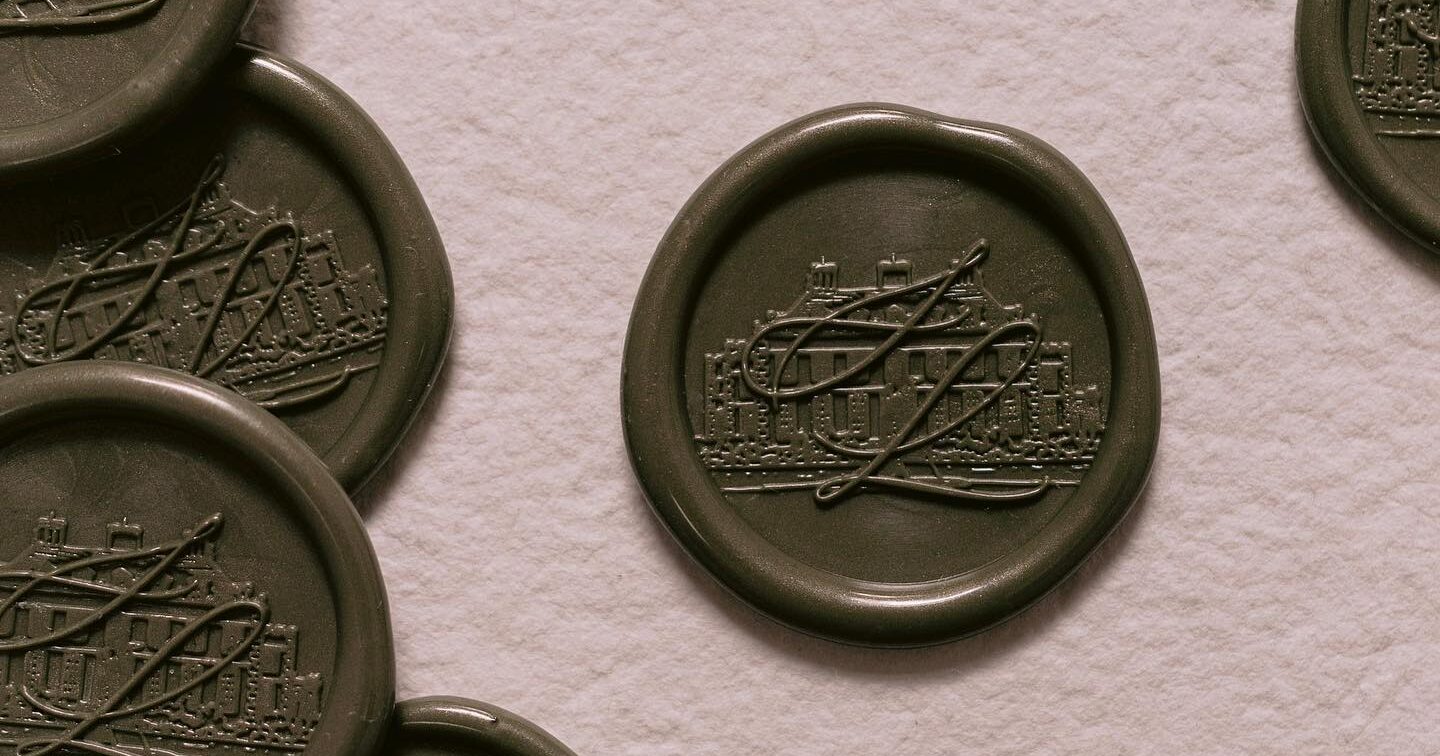
There is something quietly powerful about a wax seal. Before the envelope is opened, before a single word is read, it creates a moment—one that feels considered, tactile, and personal. In a world where so much of wedding planning lives online, this small detail brings everything back to touch. Wax seals have long moved beyond their original purpose of securing letters. Today, they are about atmosphere. About anticipation. About setting the tone for what’s to come. And when used well, they don’t just decorate an invitation—they define it.
Why Wax Seals Still Matter
Wedding invitations are more than information. They are the first impression of your day. The weight of the paper, the softness of the texture, the way each element comes together—these are the details your guests notice, even if they can’t quite explain why. Wax seals add depth, intention, and a sense that everything was chosen with care. Even the simplest suite becomes something worth holding onto.
A Modern Take on Traditional Wax Seals
Traditionally, wax seals were melted and stamped by hand, each one slightly different from the next. That irregularity is part of their charm. Today, many couples choose self-adhesive wax seals, which are handcrafted in advance and designed for ease. They offer the same organic look, while being practical, consistent, and suitable for mailing. This balance between craftsmanship and convenience makes them ideal for modern weddings.
How to Use Wax Seals on Wedding Invitations
Wax seals can be used in more ways than most people expect. While they are often associated with envelope closures, their role can extend across your entire stationery suite—adding structure, texture, and continuity. What matters most is not using them everywhere, but using them with intention.
Envelope closures
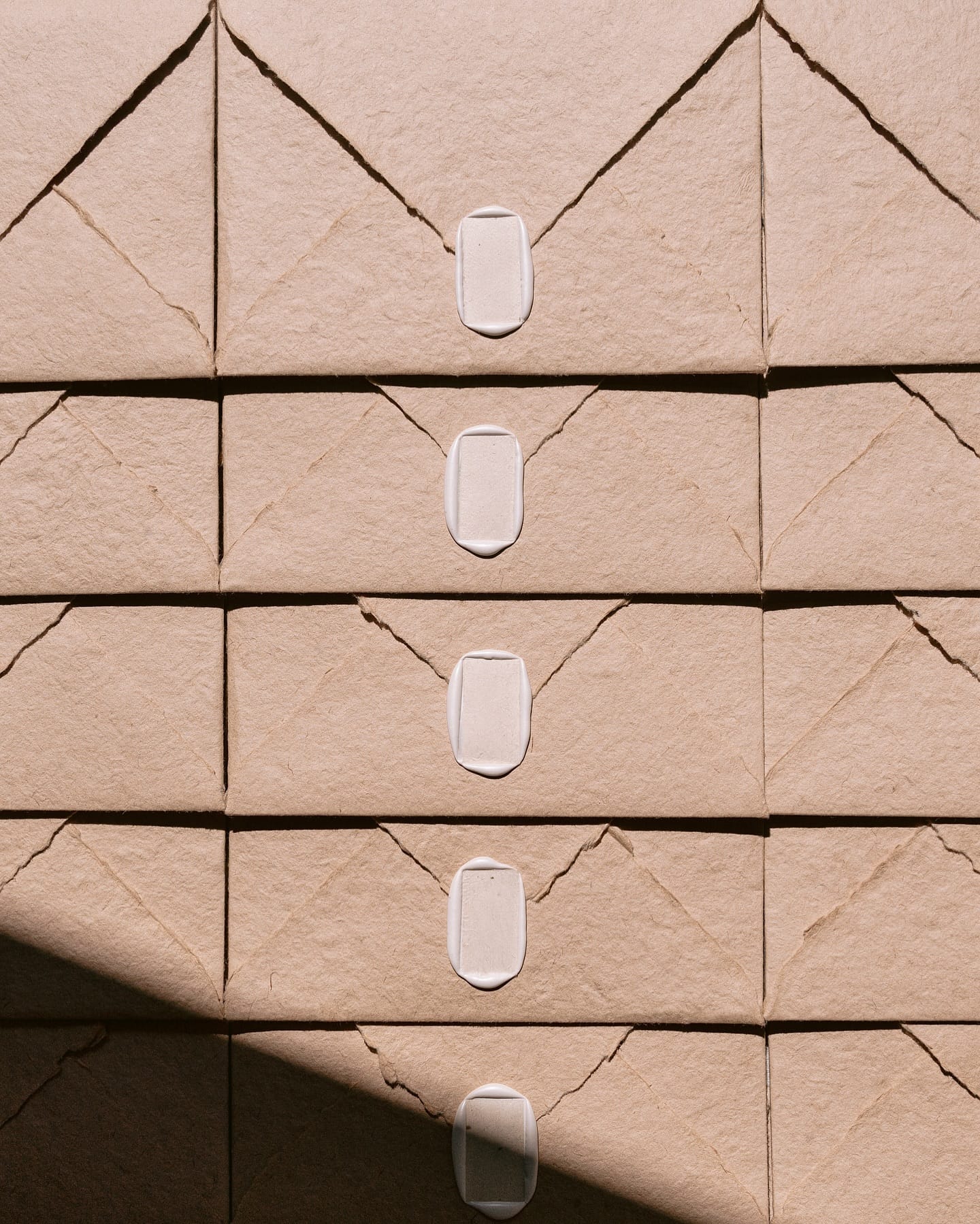
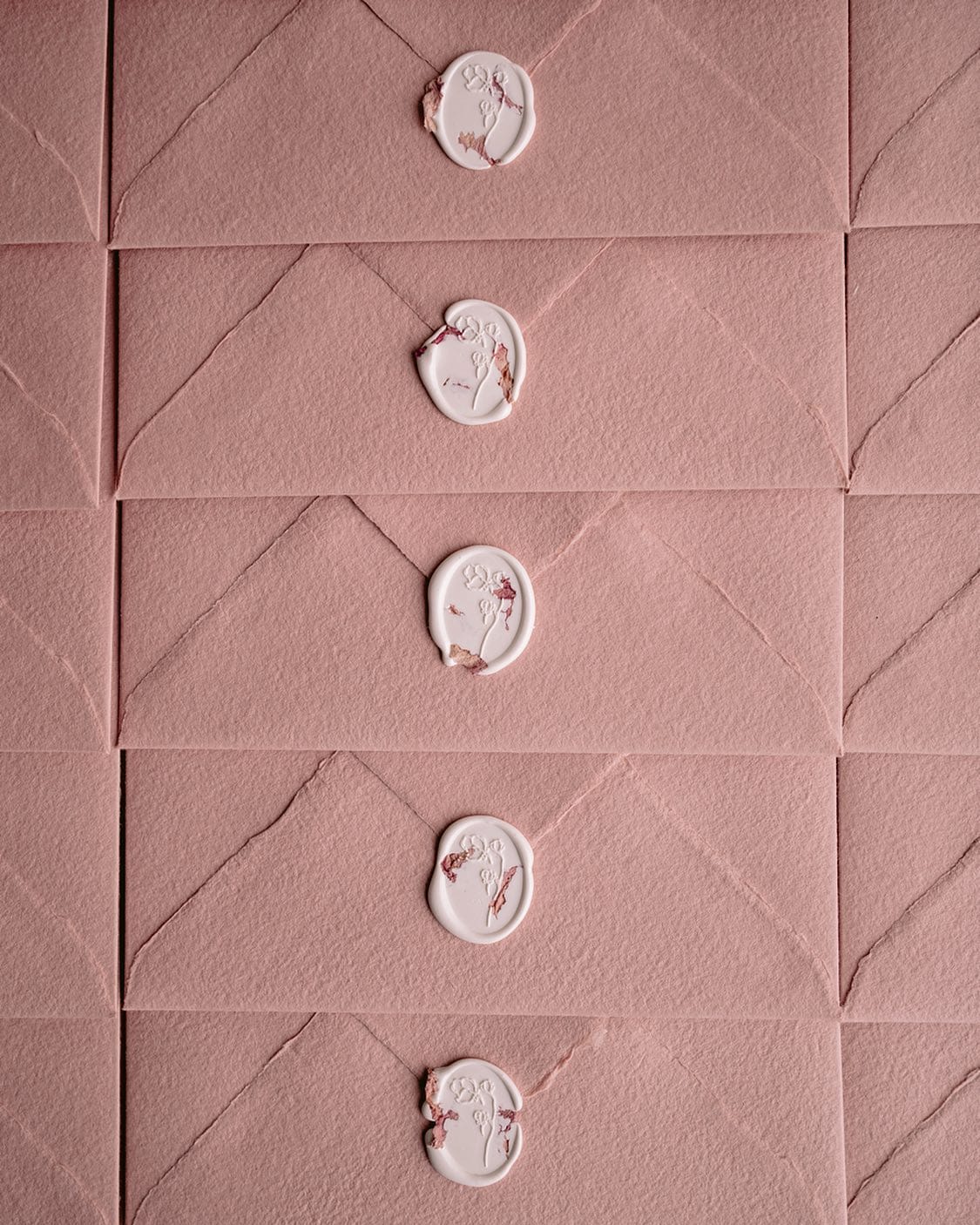
The most classic and instantly recognisable use of a wax seal is on the back of the envelope.
Placed at the point where the flap meets the body, it creates a natural focal point—something your guests notice before they even open the invitation. It introduces a sense of anticipation, turning a simple action into a small ritual. If you’re working with layered details—such as calligraphy addressing, textured paper, or soft-toned envelopes—the wax seal should complement rather than compete. A well-chosen color can quietly tie everything together.
From a practical perspective, many couples choose to pair wax-sealed envelopes with an outer envelope for protection, especially when mailing internationally. This allows you to keep the visual impact intact while ensuring everything arrives as intended.
On the invitation itself
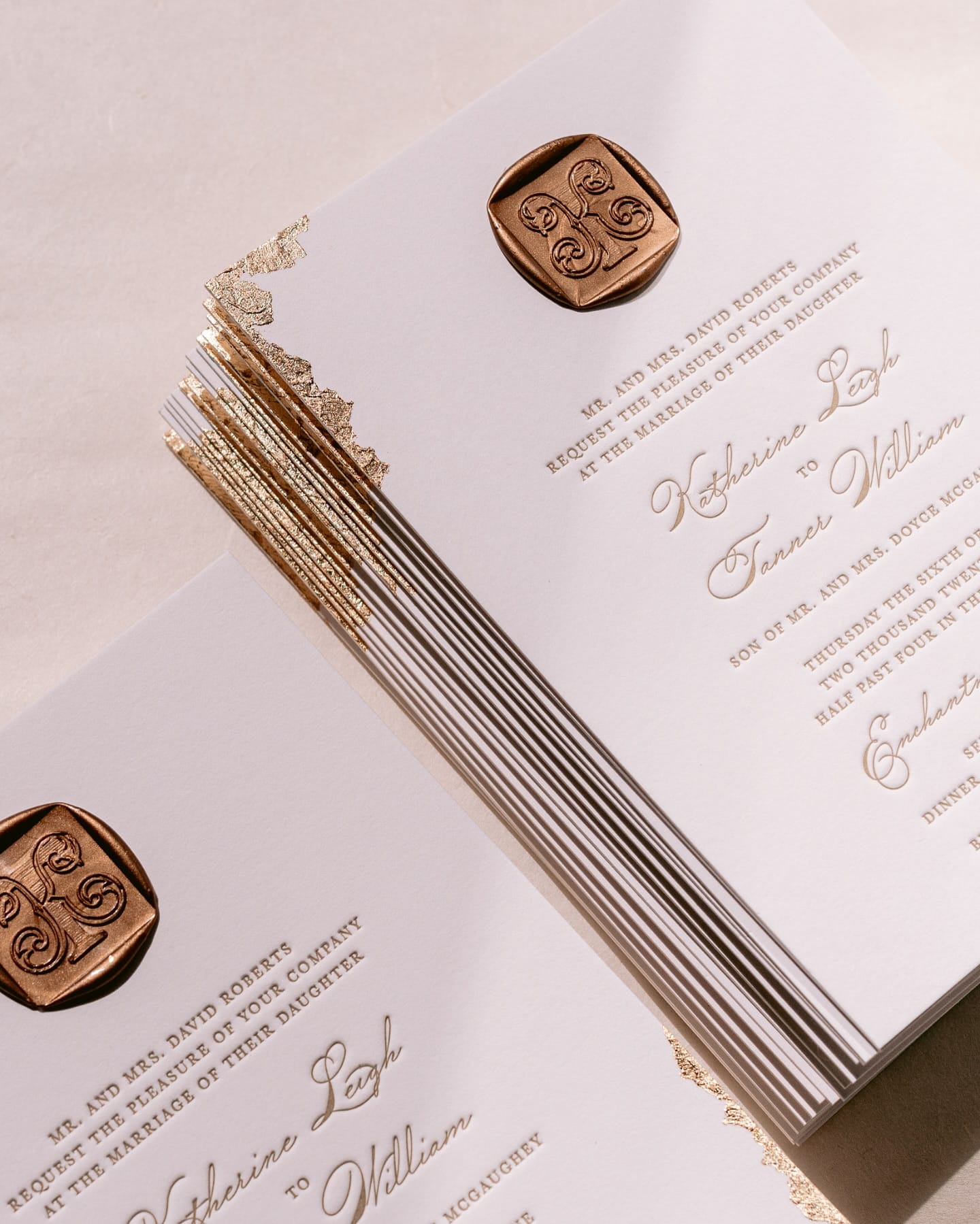
Using a wax seal directly on the invitation or one of the inner cards is a more subtle, design-led approach. Rather than acting as a closure, the seal becomes part of the composition—an intentional accent that adds depth and dimension to an otherwise flat surface.
It can be placed at the top of a details card, used to attach a smaller insert, or positioned in negative space to balance typography. When done well, it feels integrated into the design, not added afterward. This works particularly beautifully with minimal layouts, where a single tactile element can elevate the entire piece. A simple card, high-quality paper, and one perfectly chosen seal often feel more luxurious than a heavily decorated suite.
Because this placement doesn’t affect mailing in the same way as outer envelope seals, it also offers more flexibility—making it a good option for couples who want the aesthetic without logistical concerns.
Invitation Wraps
Wax seals become even more expressive when used to hold together the elements inside your invitation suite.
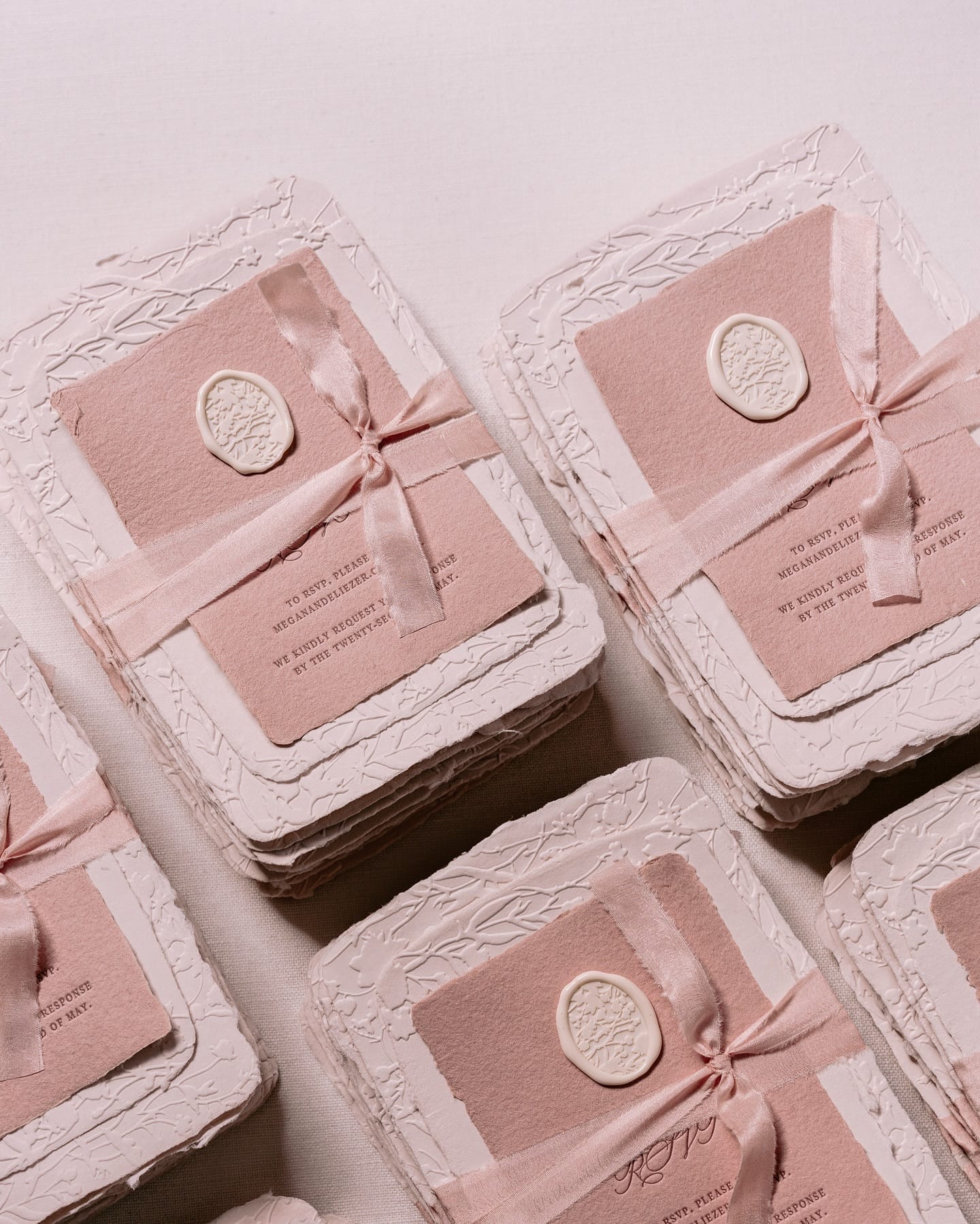
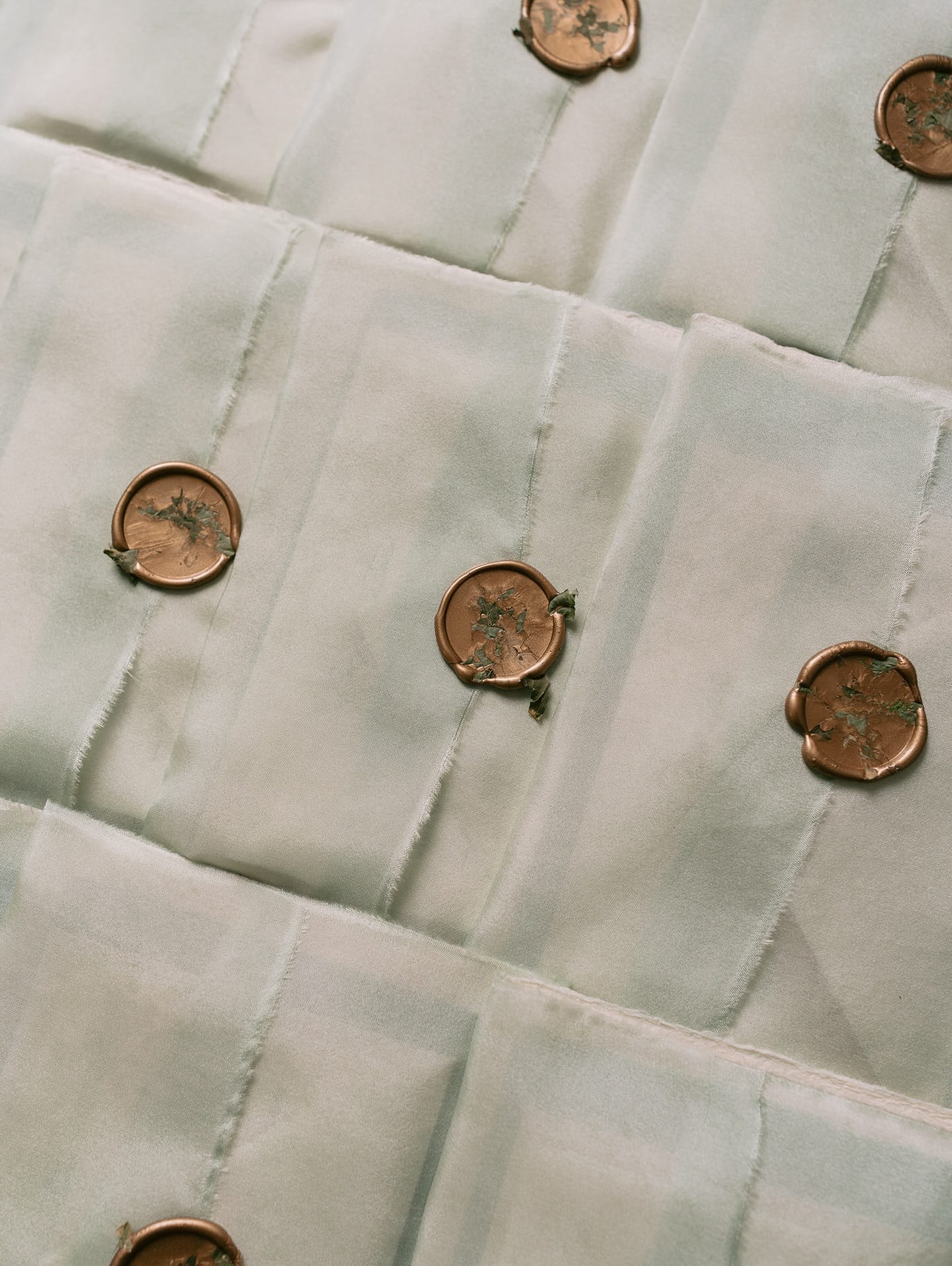
Rather than placing all cards loose within an envelope, you can create a composed, layered presentation—wrapping the suite in vellum, handmade paper, or a soft silk ribbon, then securing it with a seal. This approach transforms the experience of opening the invitation. Instead of everything being revealed at once, there’s a sense of unfolding—each layer adding to the anticipation. Vellum wraps paired with a minimal wax seal create a clean, modern look, while silk ribbons combined with a more organic seal feel softer and more romantic. Handmade paper introduces texture and irregularity, making each suite feel slightly unique.
Here, the wax seal acts as both a functional and visual anchor—it holds everything together while becoming the detail that draws the eye first.

Day of stationery
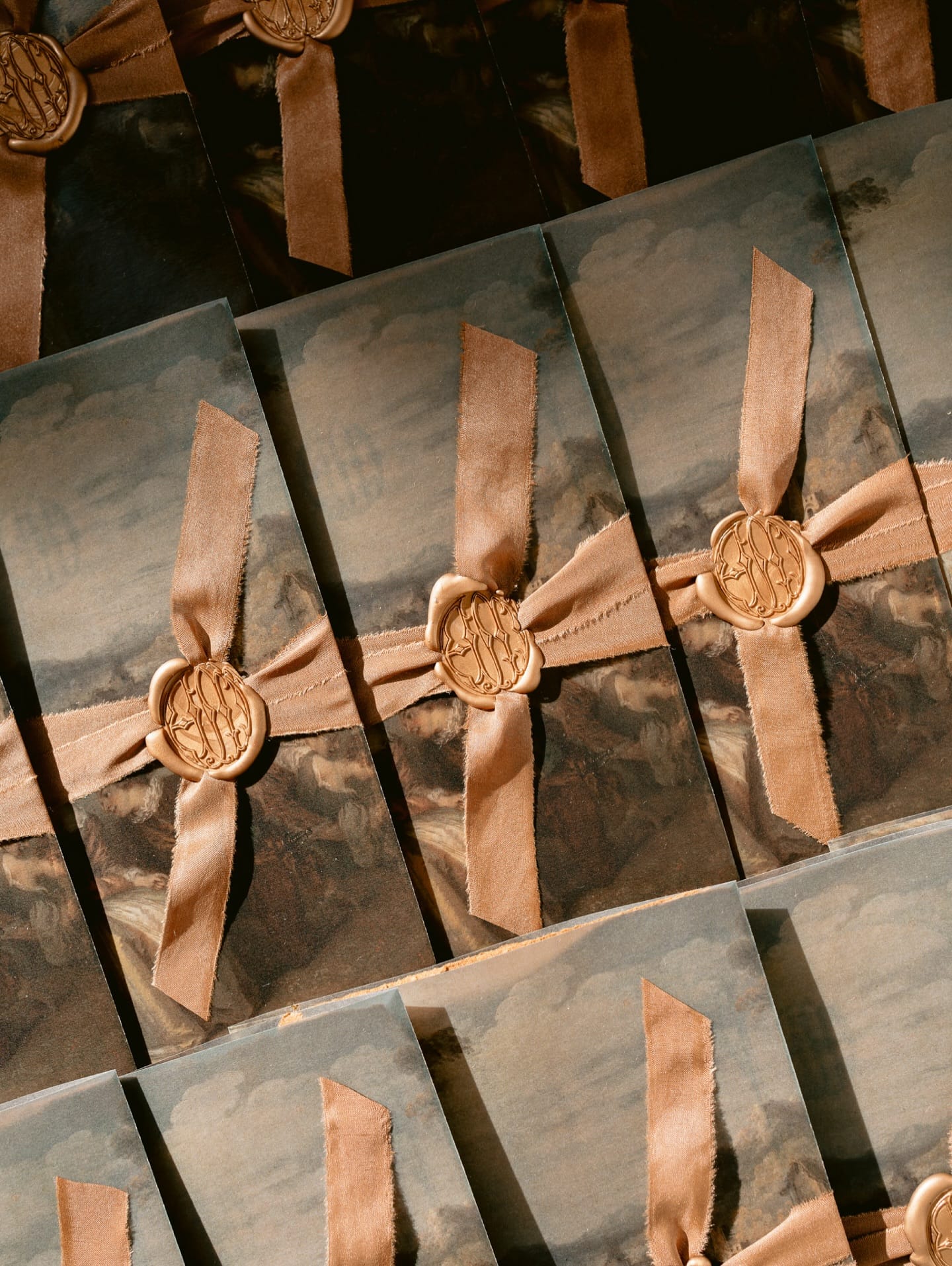
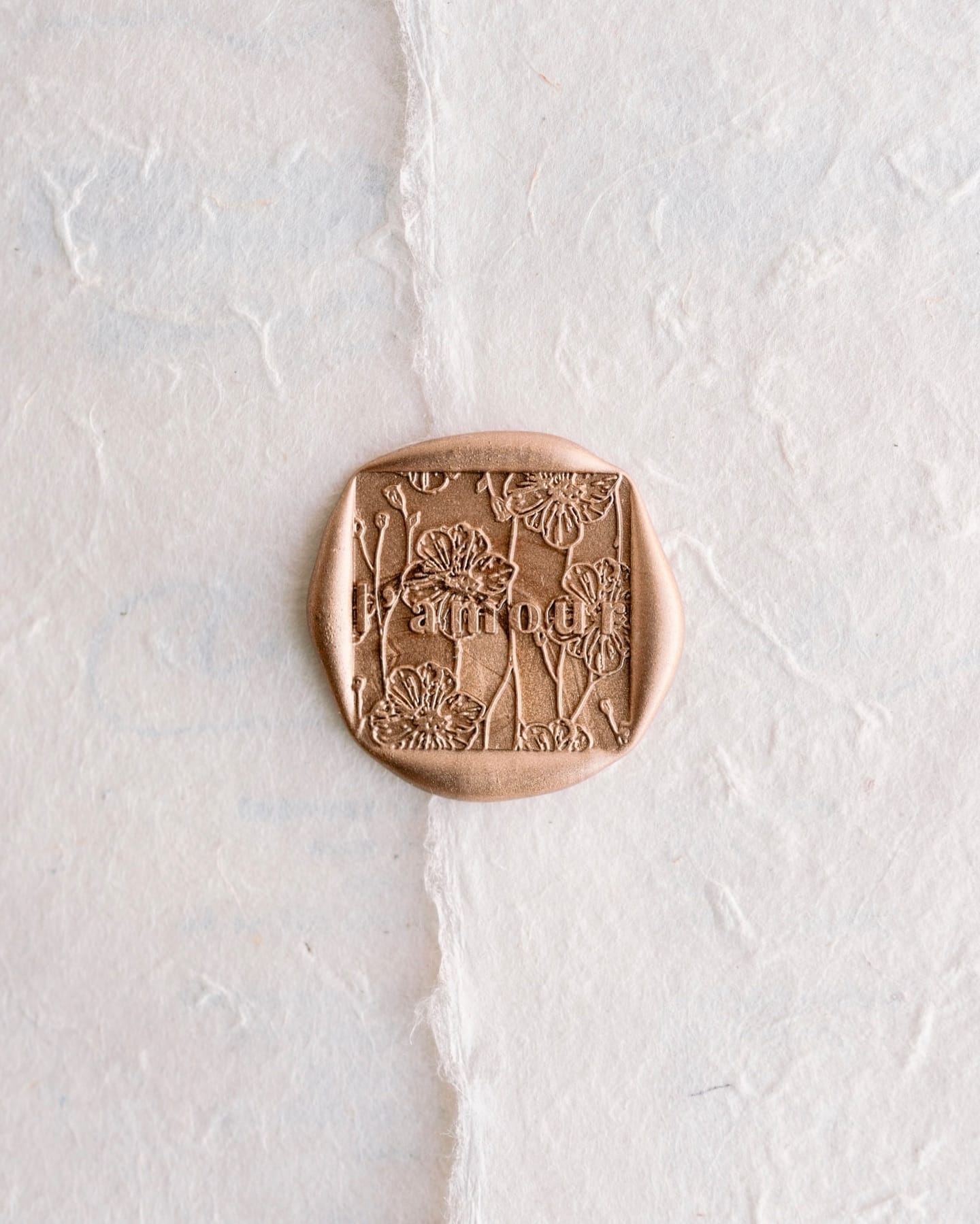
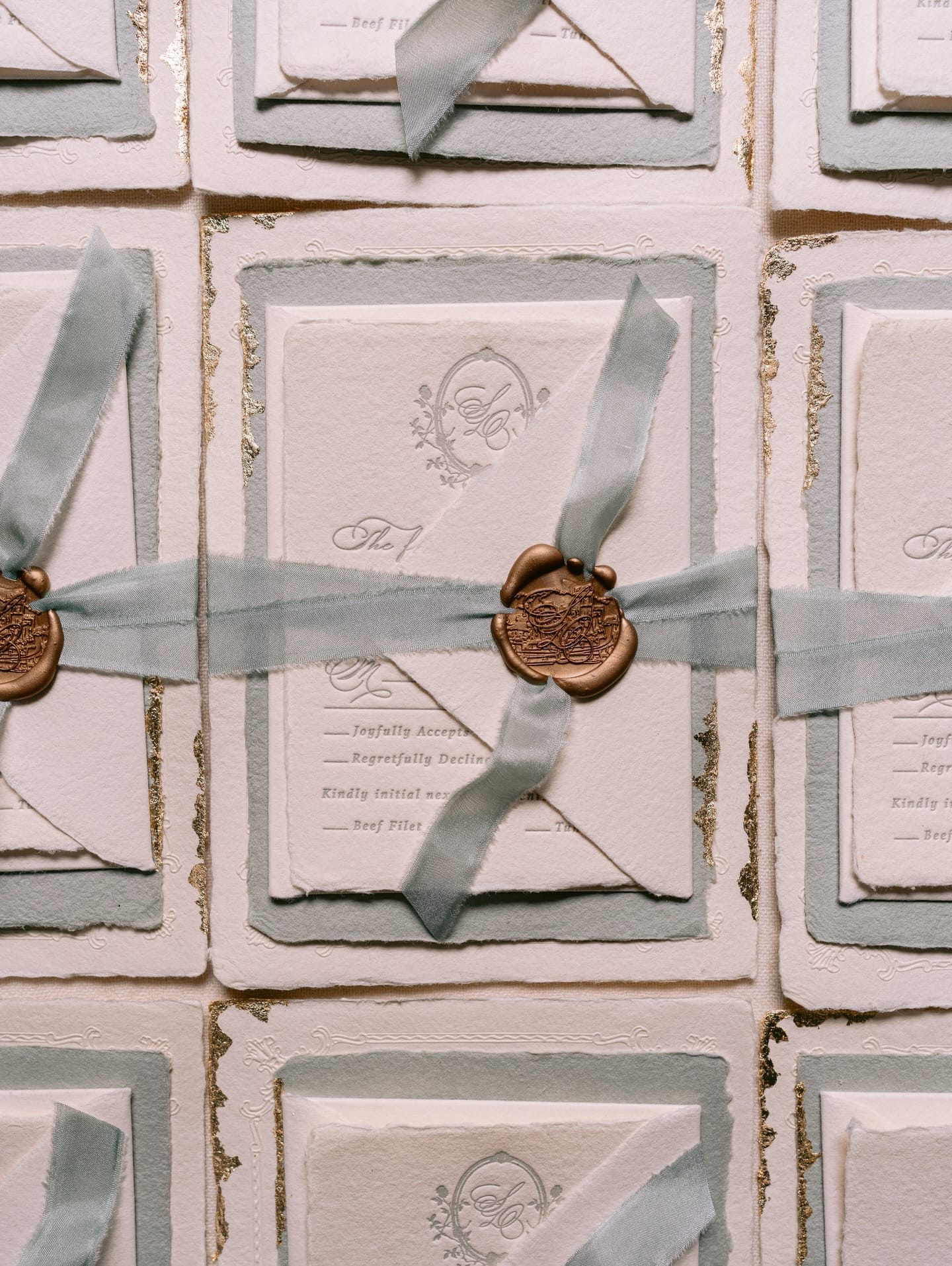
Wax seals don’t have to stop at the invitation. Carrying them into your day-of stationery creates a sense of continuity that ties everything together.
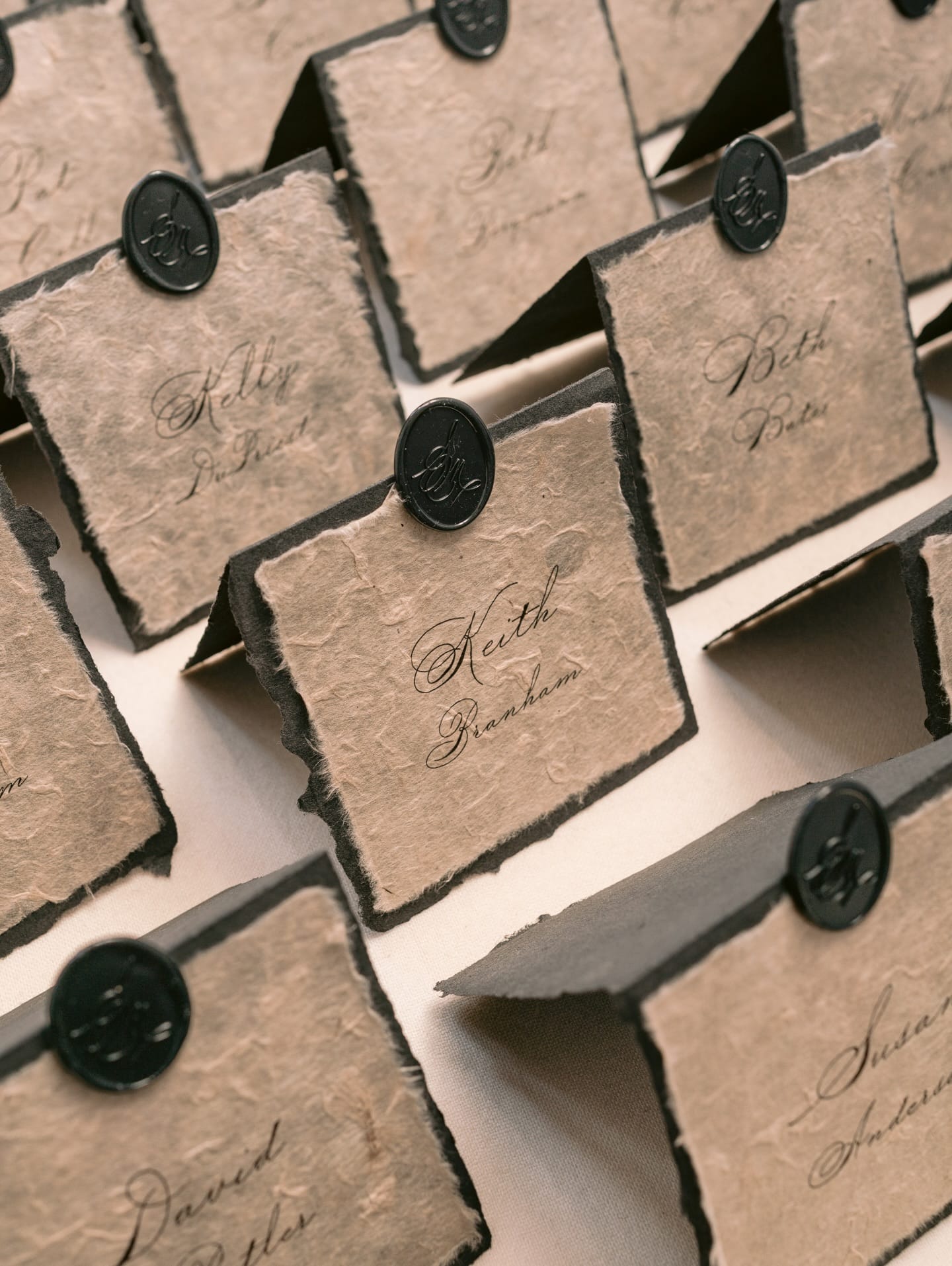
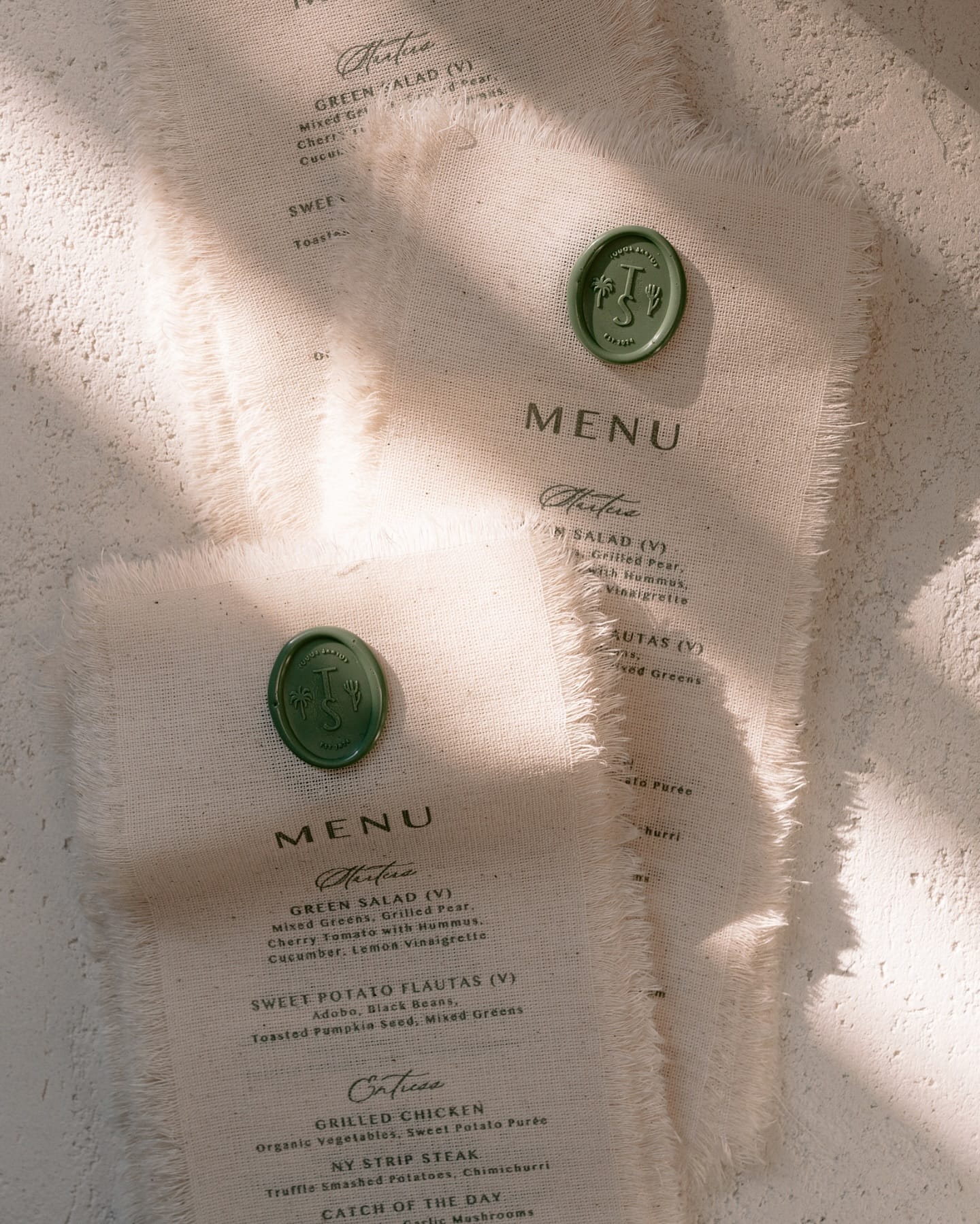
Menus, place cards, escort cards, table numbers, and even ceremony booklets can all incorporate wax seal details in subtle ways. This repetition reinforces your visual identity and makes the entire experience feel cohesive. For example, a small seal on each place card can double as both a decorative element and a way to secure layered paper. On menus, it can act as a quiet accent that mirrors the invitation suite. On vow books or programs, it adds a personal, almost heirloom-like quality. The key here is scale and consistency. Day-of pieces are often smaller and more numerous, so the wax seals should feel proportional and thoughtfully integrated—not overwhelming.
When carried through with restraint, this detail creates a seamless transition from the moment your guests open their invitation to the moment they sit down at your table.
Choosing the Right Wax Seal Style
The style of your wax seal should feel like a natural extension of your wedding aesthetic, not an isolated detail. It’s easy to think of it as something small—and it is—but visually, it carries weight. The shape, the impression, the finish… all of it contributes to the overall tone of your stationery.
For more minimal or modern weddings, wax seals tend to lean toward simplicity. Clean monograms, delicate initials, or subtle symbols paired with soft, neutral tones create a look that feels refined without drawing too much attention to itself. In these cases, the seal supports the design rather than leading it. A more romantic approach often introduces softer, more organic elements. Botanical motifs, floral impressions, and gently muted colors add movement and texture, echoing the natural details found elsewhere in the wedding. These seals feel less structured, more expressive—like they belong within a layered, tactile composition. For those drawn to something more striking, contrast becomes the defining element. Dark wax against light paper, slightly larger seals, or sharper, more defined impressions can shift the entire mood of the invitation. The effect is more editorial, more deliberate—designed to stand out rather than blend in.
Whichever direction you choose, what matters most is consistency. When the wax seal feels aligned with the typography, the paper, and the overall palette, the entire suite comes together effortlessly.
Choosing the Perfect Wax Seal Color
Color, even in the smallest detail, has the ability to shape how everything else is perceived. With wax seals, this becomes especially noticeable. Because they sit slightly raised from the paper, they catch both light and attention in a different way than printed elements do. This makes the choice of color feel more present—more intentional.
Soft tones like ivory or champagne tend to create a sense of quiet elegance. They blend gently into the palette, adding texture without strong contrast. Blush and dusty rose introduce warmth, often bringing a softness that feels romantic without becoming overly decorative. Deeper tones—such as green or burgundy—add richness. They ground the design, giving it a sense of depth and seasonality. And then there are the more defined choices, like black, which create a striking contrast and lend a modern, almost editorial quality to the suite. Metallic finishes sit somewhere in between. They catch the light subtly, adding dimension without overwhelming the composition.
Rather than trying to match every element perfectly, it’s often more effective to think in terms of balance. A wax seal can either echo tones already present in the suite or introduce a gentle contrast that makes the entire design feel more complete.
Are Wax Seals Practical for Mailing?
It’s one of the first questions couples ask—and understandably so. Wax seals are tactile by nature. They add dimension, texture, and a sense of craftsmanship. But because of that, they also interact differently with the realities of mailing.
When placed on the outside of an envelope, a wax seal creates a raised surface that may be affected by standard sorting processes. For some, this is part of the charm—embracing the slight irregularities that come with something handmade. For others, preserving every detail exactly as intended becomes the priority. There are a few thoughtful ways to approach this.
Some choose to use an outer envelope, allowing the inner, wax-sealed envelope to remain untouched until it reaches the guest. Others prefer to request hand-canceling, reducing the chance of the envelope passing through automated machinery. And in more minimal or practical setups, the wax seal can be moved inside the suite altogether, becoming part of the presentation rather than the exterior. Material also plays an important role. High-quality wax is designed to remain slightly flexible, rather than brittle, which helps prevent cracking during transit.
In the end, it becomes a balance between aesthetics and practicality—finding a solution that allows you to keep the beauty of the detail without compromising the experience.
Styling Wedding Invitations with Wax Seals
What makes a wedding invitation feel truly considered is rarely a single element—it’s the way elements come together. Wax seals are at their most effective when they are part of a layered composition. Not added at the end, but integrated into the design from the beginning.
A handmade paper invitation card, with its artisanal textured surface and naturally deckled edges, paired with a fine silk ribbon and finished with a wax seal, creates a sense of depth that feels almost effortless. A vellum wrap, lightly diffusing the typography beneath it, tied with a fine twine and held in place by a minimal seal, introduces structure while maintaining a clean, modern look. Even the simplest combinations—textured cardstock with a single seal—can feel complete when the proportions and materials are carefully considered.
There’s a natural temptation to add more, to explore every beautiful option. But often, the most striking results come from restraint. Allowing each element to have space. Letting the materials speak for themselves. In that context, the wax seal doesn’t compete—it connects.
Common Mistakes to Avoid
Like many details in wedding stationery, the difference between something that feels cohesive and something that feels overdone often comes down to small decisions.
One of the most common oversights is treating wax seals as purely decorative, without considering how they function in practice—especially when it comes to mailing. Thinking through these details early on helps avoid unnecessary compromises later. Color is another subtle but important factor. A shade that feels slightly out of place can disrupt an otherwise harmonious palette, even if everything else has been carefully chosen. There’s also a tendency to layer too many elements at once. Handmade paper, ribbons, multiple textures, bold typography—each of these can be beautiful on its own, but together they can start to compete. The result is often less refined, rather than more.
And perhaps most importantly, leaving wax seals as an afterthought rarely leads to the best outcome. When they are considered from the beginning—alongside paper, layout, and overall styling—they feel integrated, not added. More often than not, the most elegant designs are the ones that know when to stop.
Final Thoughts
Wax seals are not just decorative—they are emotional. They invite your guests to pause. To feel. To notice. And in doing so, they transform your wedding invitations into something lasting—something that will be remembered long after the day itself.
We hope you enjoyed our blog post! Stay informed with the latest updates and trends, please follow us on Instagram and Pinterest @papiradesign.
No Comments